
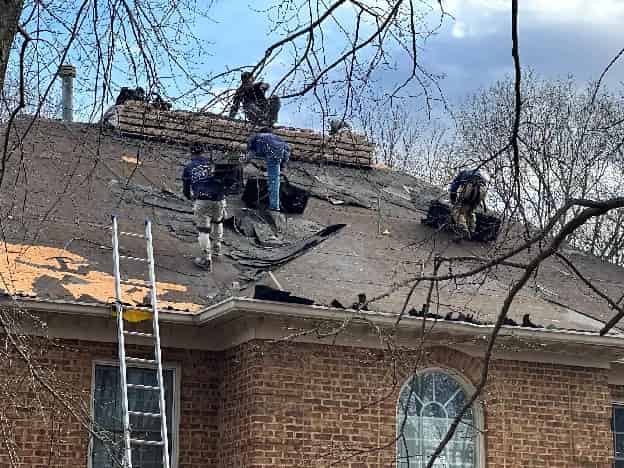
If you’re wondering “Does home insurance cover roof replacement?”, in many cases, the answer is: it can, but usually only when the damage comes from a sudden, covered event such as wind, hail, fire, or a fallen tree.
Meanwhile, roof replacement caused by normal wear and tear, age, neglect, or poor maintenance is typically treated differently, which is why the cause of the damage matters so much.
Today, we teach you when homeowners insurance may pay for a new roof, which types of damage are commonly covered or excluded, how deductibles and roof age can affect your roof replacement claim, and what steps to take if you need to file for coverage.
Key Takeaways
- Insurance pays to replace a roof damaged by a covered peril such as wind, hail, fire, or a fallen tree, but it won't pay for wear and tear, old roofs, and bad maintenance.
- Roofs older than about 15-20 years are sometimes paid at actual cash value, which means a smaller check.
- Your deductible is always your share, so you should get a roof inspection before the adjuster visits.
When Does Insurance Cover Roof Replacement?
Home insurance covers roof replacement when a sudden, accidental covered peril damages your roof so badly that a repair won't restore it. After all, your roof is part of your home's structure, so it falls under the dwelling coverage in your policy as long as the cause isn't excluded.
Covered Perils That Commonly Damage Roofs
Standard homeowners policies typically cover roof damage from:
- Wind (lifted, creased, or missing shingles after summer thunderstorms and nor'easters)
- Hail (bruised or cracked shingles, heavy granule loss, and dented vents and flashing)
- Fallen trees and limbs (common in the wooded neighborhoods of Northern Virginia and Maryland)
- Weight of snow, ice, or sleet (structural damage from heavy winter loads)
- Fire and lightning (from a house fire, a neighbor's fire, or a direct strike)
- Vandalism (intentional damage by someone else)
Will Insurance Pay for a New Roof or Just a Roof Repair?
Insurance generally covers the reasonable and the least expensive fixes that return your roof to its pre-storm condition, subject to the policy's terms. Therefore, if a handful of shingles blew off, you can expect a payout for a roof repair rather than a new roof, which can be covered when:
- Damage spreads across several slopes or a large share of the roof
- The decking or underlayment beneath the shingles is damaged
- Your shingles are discontinued, and a repair can't match the rest of the roof (matching rules vary by policy and state)
- The cost of repairs comes close to the cost of replacement
The difference between a repair check and a full replacement often comes down to documentation. Luckily, a professional roof inspection records every damaged area before the adjuster makes the call.
What Roof Damage Does Home Insurance Not Cover?
Home insurance doesn't cover roof damage caused by age, gradual deterioration, or anything your insurer decides you could have prevented, as it is built for sudden accidents rather than maintenance. The most common exclusions are:
- Wear and tear. Curling shingles, bald spots, and brittle sealant from years of sun and weather are aging rather than a covered event.
- Neglect. A leak ignored for months, or gutters so clogged that water backs up under the shingles, will likely lead to a denial.
- Pre-existing damage. Damage from before your policy started, or from an earlier storm you never reported, isn't covered, either.
- Faulty installation or defective materials. These fall under your contractor's workmanship warranty or the manufacturer's warranty.
- Mold, rot, and pests. Slow moisture problems and damage from squirrels, raccoons, birds, or insects are also excluded.
- Flood and earthquake. According to FEMA's FloodSmart.gov, most homeowners insurance doesn't cover flood damage, so rising water needs a separate flood policy.
- Cosmetic damage. Some insurers exclude hail dents that don't affect how the roof works, which is common with metal roofs.
The test adjusters apply is simple: all they need to know is whether the damage was sudden and accidental, or whether it could have been prevented. It’s best to always keep receipts, photos, and inspection reports, even from routine maintenance, since they're your best evidence that age or neglect didn't cause the problem.
Will Insurance Cover a 20-Year-Old Roof?
Yes, a 20-year-old roof is still covered for sudden damage from a covered peril. However, some insurers pay roofs older than roughly 15-20 years at actual cash value, which means a smaller check once depreciation is subtracted.
The 15-20 Year Threshold
Once a roof passes this age, insurers may switch its coverage from replacement cost to actual cash value, add a roof-age surcharge, or require an inspection before renewal. Some won't write a new policy on an older roof at all.
You should always report your roof's true age, as understating it can give your insurer grounds to reduce or deny a claim, while a receipt for a recent replacement may lower your premium.
Actual Cash Value vs. Replacement Cost: How Much Will Insurance Pay?
Insurers settle roof claims in one of two ways:
- Replacement cost value (RCV) pays what it costs to install a comparable new roof, minus your deductible.
- Actual cash value (ACV) subtracts depreciation for age and wear first, so you receive less. The National Association of Insurance Commissioners notes that insurers usually base depreciation on the roof's condition, the cost of a new one, and its expected lifespan.
Example: A hailstorm destroys a roof with an $18,000 roof replacement cost. The adjuster depreciates it by 40% ($7,200), and the deductible is $1,500.
| Coverage type | Calculation | Payout |
|---|---|---|
| Replacement cost (RCV) | $18,000 − $1,500 | $16,500 |
| Actual cash value (ACV) | $18,000 − $7,200 − $1,500 | $9,300 |
Under ACV, you cover the $7,200 gap yourself. With RCV, many insurers first pay the ACV amount, then release the held-back depreciation (called recoverable depreciation) once you submit the final contractor invoice.
How Much Will You Pay Out of Pocket for an Insured Roof Replacement?
For an insured roof replacement, you pay at least your deductible out of pocket. Depending on your policy, you may also pay for depreciation, code upgrades, and any upgrades you choose.
- Flat deductible = a fixed dollar amount, such as $1,000, applied to each claim.
- Percentage wind/hail deductible = a percentage of your dwelling coverage (Coverage A) rather than of the claim. With $400,000 in dwelling coverage, a 1% deductible is $4,000 and a 2% deductible is $8,000. Because wind and hail cause most roof claims, you need to check your declarations page for this one.
- Depreciation = on an ACV policy, the depreciated amount is yours to cover.
- Code upgrades = local building codes may require ice and water shield, drip edge, or new decking. Ordinance or law coverage pays for these, but without it, you have to do so.
- Elective upgrades = moving from 3-tab shingles to architectural shingles or metal is your cost.
Be wary of any contractor who offers to "cover" or waive your deductible; it can amount to insurance fraud, and you're the one who signed the claim.
How to Get Homeowners Insurance to Pay for Roof Replacement
To get homeowners insurance to pay for roof replacement, you must act quickly and document everything. Here are the steps you should follow to ensure your claim has the best chance of approval:
- Document the damage. Photograph damage from the ground and any interior leaks, and note the storm date. Don't climb onto a damaged roof.
- Prevent further damage. Tarp openings or make temporary repairs, and keep every receipt, as policies do expect you to limit additional damage.
- Schedule a professional roof inspection. A roofer can spot hail bruising and lifted shingles you can't see from the ground.
- Review your policy. Check your deductible, ACV or RCV settlement, and reporting deadline.
- File your roof replacement claim promptly. Late reporting is a common reason for denial.
- Meet the adjuster with your roofer on site. Your roofer can point out damage the adjuster might miss.
- Review the estimate. Ask for a supplement if items like flashing, drip edge, or code upgrades are missing.
- Complete the work and send the final invoice to collect any recoverable depreciation.
What Happens if Your Roof Replacement Claim Is Denied?
If your roof replacement claim is denied, that doesn't always have to be a final decision. Most claims get rejected because the insurer attributes the damage to age or wear, the damage costs less than the deductible, it was reported late, or it existed before the storm.
In case this happens to you, you should:
- Get the denial in writing. Ask the insurer to cite the exact policy language it relied on.
- Request a re-inspection. Have your roofer attend and document the storm damage.
- Submit independent evidence. Use your inspection report, dated photos, and local storm reports for the date of loss.
- Use the appraisal clause if you agree the damage is covered but dispute the amount. Each side hires an appraiser, and an umpire settles differences.
- Contact your state insurance regulator. Homeowners who aren't satisfied with their insurer's response can contact their state insurance department: the Virginia Bureau of Insurance, the Maryland Insurance Administration, or the DC Department of Insurance, Securities and Banking.
Storm-Damaged Roof? Get a Free Inspection from Michael & Son
Before you call your insurer, you need to find out exactly what you're dealing with. Michael & Son inspects storm damage across Northern Virginia, Maryland, and Washington, DC, documents every issue with photos, and meets your adjuster on site so nothing gets missed.
Final Thoughts
In conclusion, home insurance does cover roof replacement, but only when a covered peril caused the damage. Your payout depends on your roof's age, whether your policy pays actual cash value or replacement cost, and your deductible.
After all, homeowners get the best outcomes if they act fast, document everything, and have a roofer on their side before the adjuster arrives. If this is you, review your policy now, before the next storm, so you know exactly where you stand if the issue strikes!
Does Home Insurance Cover Roof Replacement? FAQ
Does homeowners insurance cover a roof leak?
Will insurance pay to replace the whole roof if only part is damaged?
Should I call a roofer or my insurance company first?
Will filing a roof claim raise my insurance rates?
What is the most expensive part of replacing a roof?
Does insurance cover a hole in the roof?
Last updated November 13, 2026